


Ginger: The Golden Thread of Flavor
January 31, 2026
5 Minutes
Ginger provides a structural low-note to balance acidity—its aromatic aldehydes create a bridge between carrot’s sweetness and fatalii’s radiant heat. The science of why this rhizome anchors the sauce, and what happens when it’s misused.
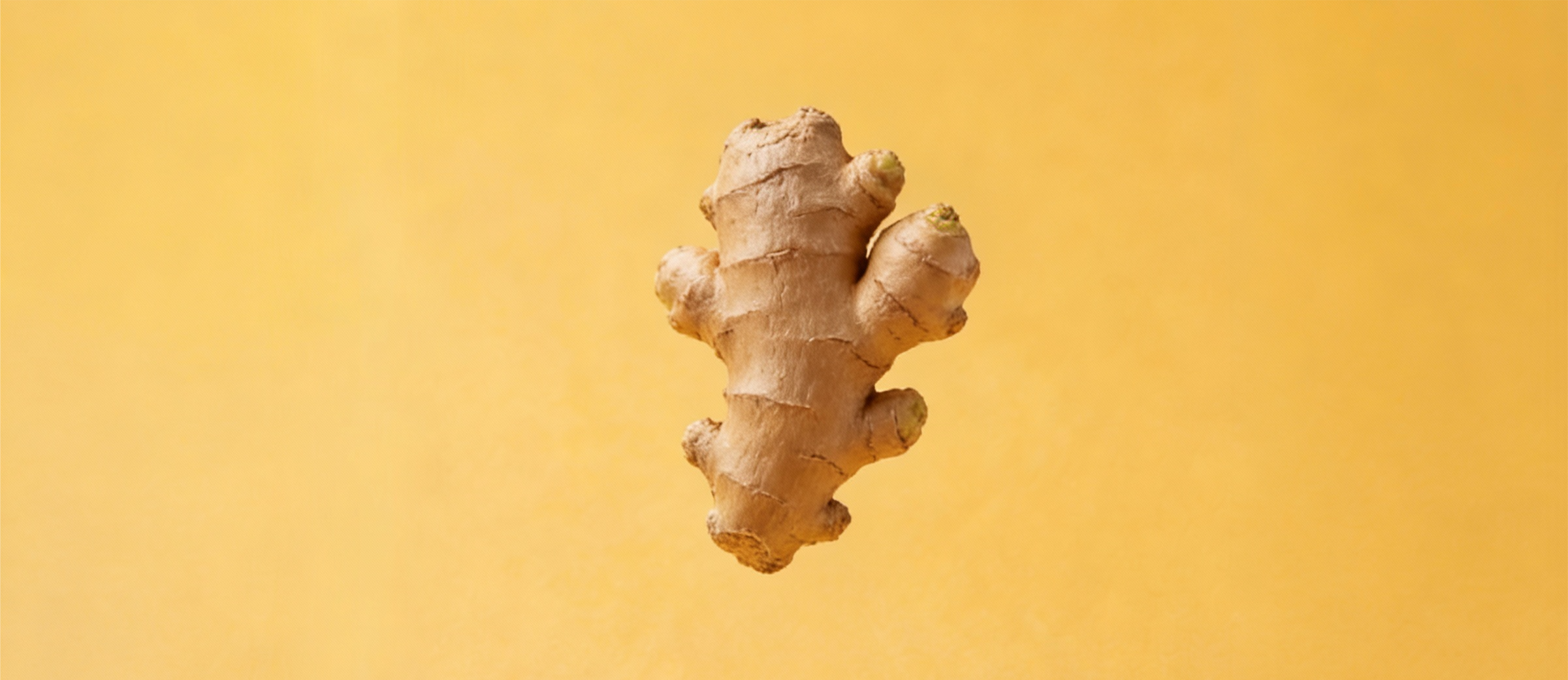
Why This Depth Matters
Yesterday we integrated lime as our citrus anchor to complete the structure. Now we have the heat (Fatalii), the foundation (Carrot), and the edge (Lime). Currently, the sauce is dominated by "high notes"—it is bright and sharp, but it lacks a floor.
Ginger works because it provides a "low-frequency" warmth that grounds the citrus without smothering it. While garlic or onion might introduce heavy sulfur compounds that compete for attention, ginger acts as a radiant depth. It contains its own unique heat that doesn’t sting; it glows. By adding this rhizome, we transform the pepper’s fast-burning fire into a full-spectrum experience that lingers on the palate long after the initial bite.
Botanical Background
Zingiber officinale—a tropical herbaceous perennial native to Island Southeast Asia. It was one of the first spices exported from the Orient, arriving in Europe via the spice trade centuries ago. Unlike a true root, ginger is a rhizome—a horizontal underground stem that puts out both shoots and roots.
The plant stores energy in the form of starch and pungent oils. Its personality changes with age: young "spring" ginger is mild and juicy, while the mature "cured" ginger found in most markets has developed the concentrated fiber and pungent gingerols required for a structured hot sauce.
Flavor Profile
- Primary: Sharp, zesty, and warming
- Secondary: Woody and slightly earthy
- Tertiary: Faint citrus/lemony undertones
- Pungency: Driven by gingerol, a chemical relative of capsaicin. While capsaicin targets the tongue with a sharp "stinging" sensation, gingerol provides a "deep-tissue" warmth in the back of the throat.
For this puzzle, ginger acts as a flavor stabilizer. It shares enough citrus character to be a friend to the lime, but enough woodiness to be a brother to the carrot.
The Vanilloid Connection
Here is what makes ginger scientifically vital for this specific sauce: Gingerols and capsaicin are molecularly related. They both belong to the vanilloid family and interact with the same TRPV1 receptors in your mouth.
When they meet in a sauce:
- The Bridge: Ginger contains citral and zingiberene. Citral is a direct aromatic link to the lime and fatalii. Zingiberene provides the earthy connection to the carrot.
- Heat Extension: Because gingerol and capsaicin trigger receptors differently, the ginger "widens" the heat. Instead of a single spike of fire from the Fatalii, the ginger creates a warm "shadow" that follows the pepper, making the heat feel more intentional and less aggressive.
Fresh vs. Fermented
Fresh (Minced or Grated):
- Highest concentration of zesty aromatics.
- Strongest "zing" that connects to the lime.
- Recommended: We want the vibrant, fresh zing to lead the depth.
Dried/Powdered:
- Muted aromatics, more "dusty" sweetness.
- The zesty bridge is lost.
- Not recommended for this tropical profile.
Fermented:
- In a mash, ginger undergoes a transformation. The sharp "bite" mellows into a savory, complex hum. This is where the true "Depth" of the puzzle is realized over time.
What Will Destroy This Pairing
Rosemary and Resinous Herbs
Rosemary’s piney, camphor-like punch is an "alpha" flavor. When combined with ginger and fatalii, the two compete for the same woody territory. The result is a sauce that tastes medicinal, like a cleaning product.
Heavy Liquid Smoke
This is a bright, sun-filled sauce. Adding heavy smoke is like pulling a dark curtain over a window. Smoke molecules are large and "sticky"—they will bury the delicate citrus shadow, leaving the sauce tasting muddled and "gray."
Excessive Raw Garlic
A tiny hint of garlic can support depth, but a heavy hand introduces thiosulfinates (sharp sulfur) that clash with ginger’s zesty aldehydes. The "tropical" mystery is replaced by a "kitchen-sink" savory profile.
Preparation for Blending
- Selection: Look for "hands" that are heavy for their size with smooth, taut skin. Shriveled skin means the aromatic oils have dried up.
- Peeling: Use the "Spoon Method"—scraping the edge of a spoon against the skin removes the peel while preserving the oil-rich flesh just beneath it.
- The Cut: Always slice against the grain of the fibers. For a smooth sauce, grate the ginger into a paste before adding it to the carrot-pepper base.
The Puzzle So Far
- Day 1: Fatalii ✓ — The citrus fire
- Day 2: Carrot ✓ — The sweet, earthy foundation
- Day 3: Lime ✓ — The acid structure
- Day 4: Ginger ✓ — The warming depth
- Day 5: The Discovery 🔒 → Tomorrow
- Day 6: The Connection
- Day 7: The Recipe
Tomorrow
The "Discovery" ingredient. Most people would never think to add this to a fermented sauce. It is the secret tropical bridge that turns these four ingredients into a single, haunting melody.
Question: Do you prefer your ginger to have a sharp "bite," or do you prefer it to be a mellow, warming background note?
#FlavorPuzzle #FataliiWeek
Read more from
Our Blog.



The Recipe: Where Bright Burn Begins
February 3, 2026
5 Minutes
Seven days of molecular mapping. One experimental recipe. Theory predicts a warm-cold paradox that resets your palate—now we need to know if it works in reality.
Read more
The Connection: The Moment the Puzzle Pieces Click
February 2, 2026
5 Minutes
We call it "The Connection" because this is the moment the puzzle stops being five separate ingredients and starts being one sauce. It is the difference between a jar of noise and a bottle of harmony—the hidden logic that makes the flavor feel "designed" rather than just mixed.
Read more
Cardamom: The Molecular Mirror of the Flavor Puzzle
February 1, 2026
5 Minutes
We call it "The Discovery" because today we reveal the hidden balance of the sauce. Cardamom is the unique chemical "chameleon" that allows the lime and the ginger to communicate. The science of the "Cool-Fire" finish and how it creates a sensory loop.
Read moreSome Combinations Just Work
Want to Know Why?
Be among the first 100 makers to access the tool that's changing
how hot sauce gets created.
